Decades of service
Correctly coded, correctly lapped lead is one of the longest-lasting materials on a roof and typically outlives the tiles around it.
24/7 emergency call-outs — Havant, Portsmouth & Hampshire24/7 emergency call-outs

Leadwork in Havant, Portsmouth & Hampshire
Valleys, flashings, abutments, bay tops and chimney details formed in correctly coded lead — the part of the roof that decides whether the rest of it stays dry, done by people who dress it rather than seal over it.
Family-run, owner-led · free inspection with photographic report · £1,000,000 public liability insurance · guarantee confirmed in writing.
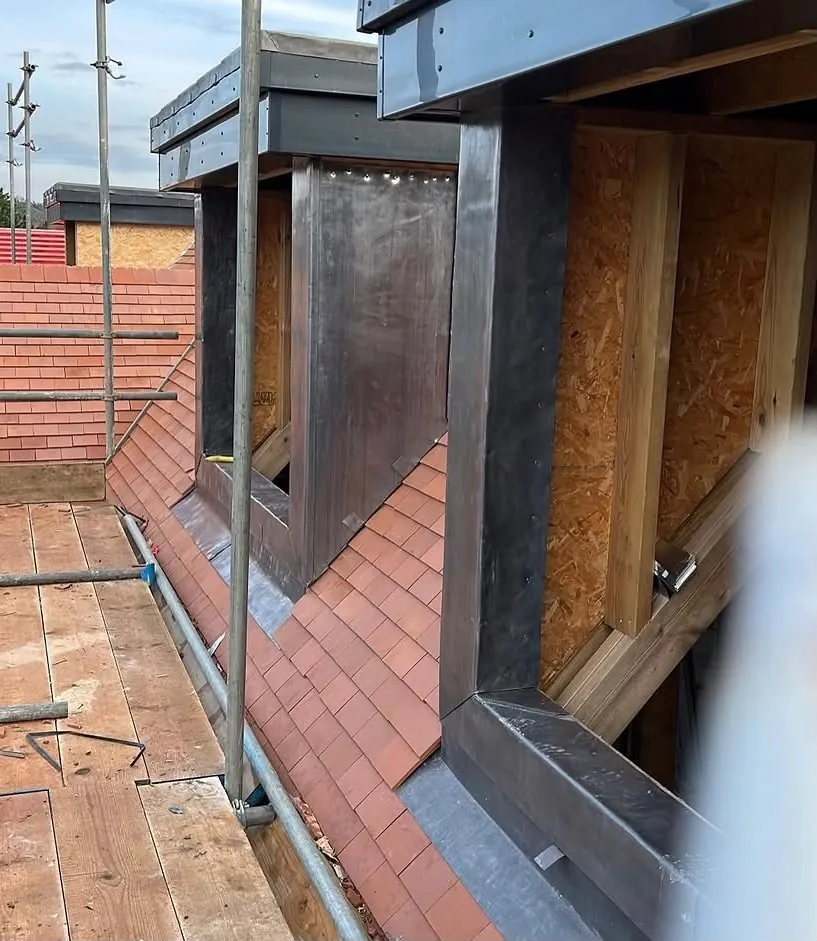
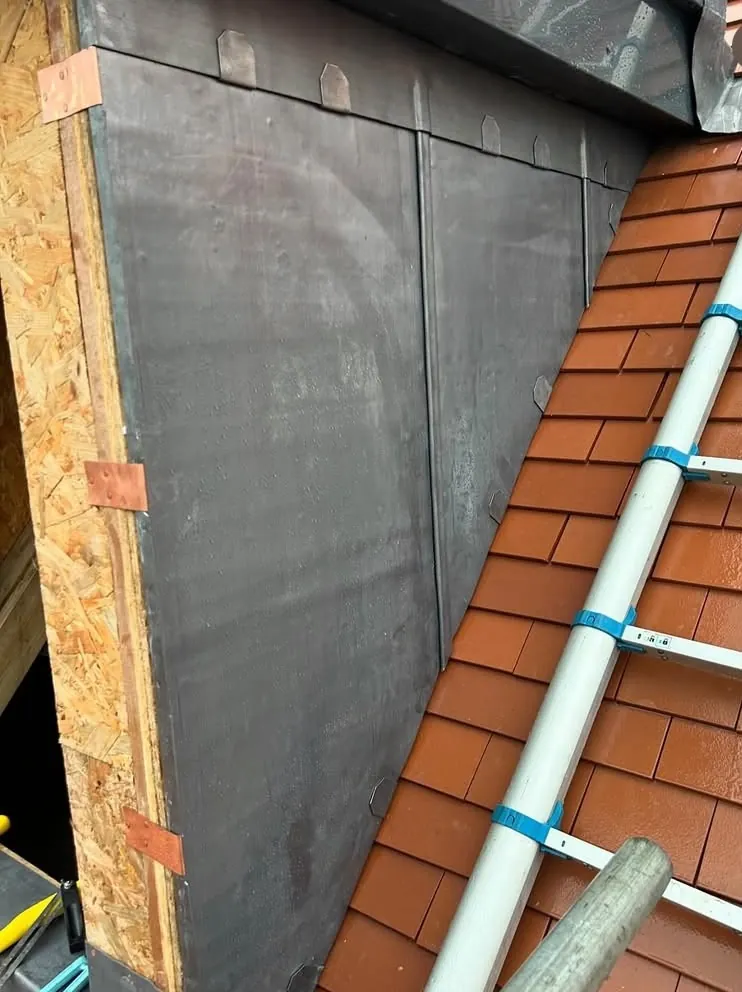
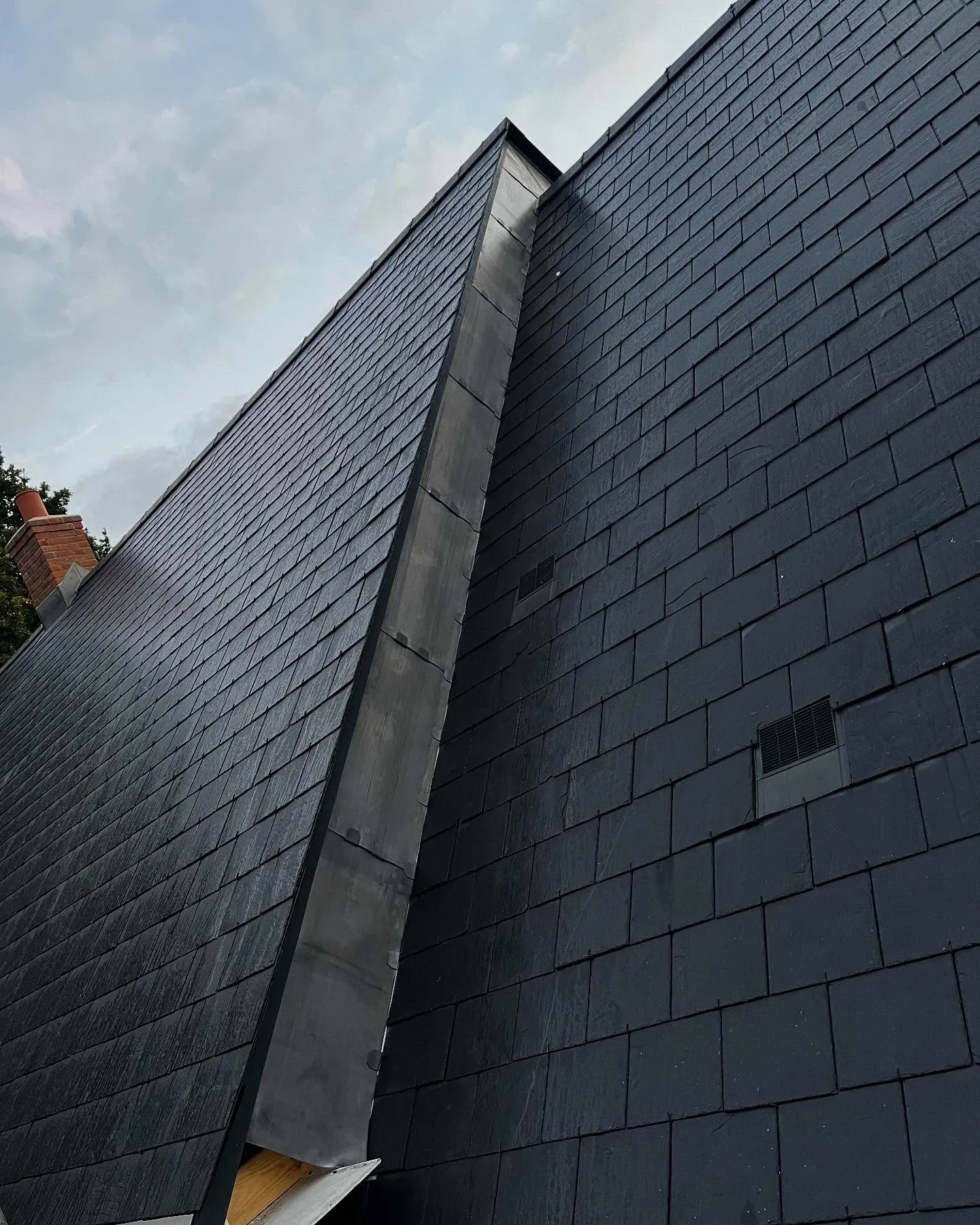
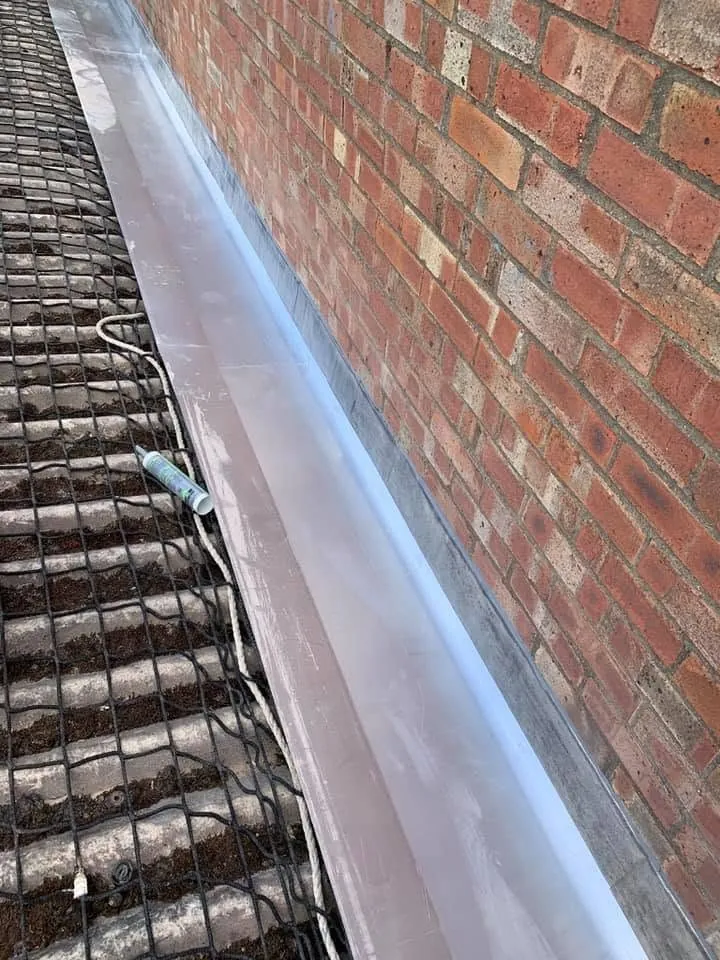
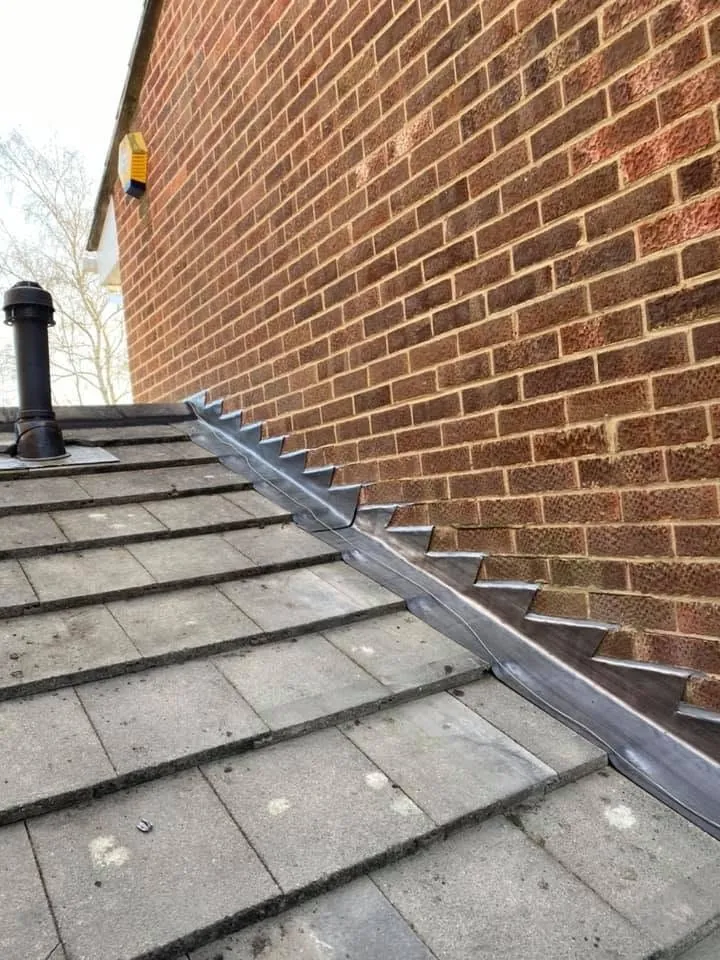
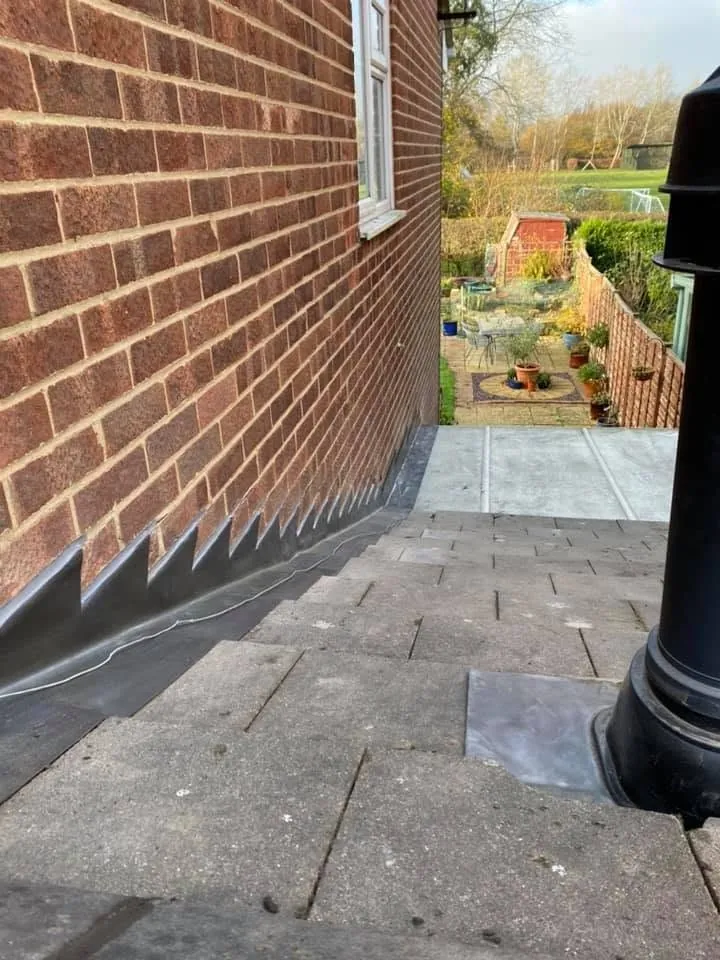
Leadwork we have completed
What it is
Wherever a roof meets a wall, a chimney, a valley, a bay or a dormer, tiles cannot do the job. Lead does — provided it is the right code, the right length and dressed to the shape it has to weather.
Lead has been used on British roofs for centuries because it does something almost nothing else does: it forms permanently to a complex shape, tolerates decades of thermal movement, and does not degrade in sunlight. Correctly installed leadwork routinely outlasts the covering around it.
It fails for predictable reasons, and almost all of them are installation faults rather than material faults. Pieces cut too long split along a fatigue line because the lead cannot expand and contract freely. Lead that is too thin for the exposure tears. Flashings pushed into a joint without wedges and pointing work loose. And a great deal of what we find is not leadwork at all — it is mortar fillet or mastic used because lead is slower to do properly.
We replace those details with lead of the correct code, cut to appropriate lengths with proper laps and welts, chased into raked joints, wedged and pointed, and clipped where wind uplift demands it. On valleys the lead is laid over a sound substrate with correct laps and free movement, because a valley carries the run-off of two roof planes and is under more load than any other detail on the roof.
Whether it is one flashing on a bay window or every junction on a full re-roof, you get photographs of the failed detail before, the new work after, and a fixed written price in between.
Anyone with a persistent leak near a chimney, wall junction, valley, bay or dormer; owners of period properties with original leadwork at end of life; anyone previously 'repaired' with mastic.
When lead has split, torn at a fold, lifted out of the brickwork, or been replaced with a cracking mortar fillet — and as standard during any re-roof, so the details match the new covering.
Leadwork is a craft skill with rules: code by application, maximum piece lengths, laps, welts, clips and fixings. Ignore them and lead that should last decades fatigues and splits within a few years.
Removal of failed lead or fillets, substrate check and repair, new lead cut and dressed on site, chasing, wedging and repointing, clipping where required, and completion photographs.
What ignoring it costs
Lead failures rarely produce a dramatic drip. They let a small amount of water into the structure every time it rains, in a place nobody looks, and the damage accumulates out of sight.
Water entering at an abutment or valley soaks battens, rafters and sometimes the wall plate before it ever reaches a ceiling. Timber repair is the most expensive element of any roofing job.
A failed abutment flashing puts water into the cavity or the wall build-up. It surfaces as internal damp that gets misdiagnosed as rising damp or condensation, and gets treated repeatedly without success.
Mastic and flashing tape over old lead buys a season or two, then cracks along the same line. People pay three or four times for temporary fixes rather than once for a detail formed properly.
Our process
Every junction checked — valleys, abutments, chimneys, bays, dormers and parapets — with photographs of splits, fatigue lines and failed fillets.
We identify why the lead failed, not just where. Length, code, fixing or substrate — the reason determines what the replacement needs to do differently.
A quote specifying the detail, the lead code and any substrate work, so you can see exactly what is being installed and what it costs.
Lead cut to correct lengths, dressed to shape on site, chased into raked joints, wedged, pointed and clipped where exposure requires it.
Falls and laps checked, surrounding covering made good, debris cleared, completion photographs sent and your guarantee confirmed in writing.
What you get
Correctly coded, correctly lapped lead is one of the longest-lasting materials on a roof and typically outlives the tiles around it.
Replacing the detail rather than sealing it removes the entry point, which is why properly formed leadwork ends repeat visits for the same stain.
Correct piece lengths, laps and clips let lead expand and contract through summer and winter without fatiguing along a fold.
Lead is the historically correct material on older Hampshire housing and looks right where a plastic or mortar substitute never will.
Sound junctions keep water off rafters, wall plates and internal walls — the elements that cost multiples of the leadwork to repair.
Photographs of the stripped junction and the finished lead show you the part of the job that is invisible from the ground once scaffold comes down.
In detail
Lead is specified by code — its thickness — and by application. Below are the details we form most often on Hampshire roofs.
“From start to finish, the service provided was excellent. It is clear that they take great pride in their work and genuinely care about making sure their customers are happy with the finished result. There was no pressure, and I felt confident that I was receiving genuine advice and a fair price. They were also respectful of the property and left everything clean and tidy once the work was finished.”
Lead sheet is graded by code, with a higher number meaning thicker material. Soakers and simple flashings use lighter codes, while valleys, back gutters, parapet gutters and fully exposed details need heavier lead to resist tearing and thermal fatigue. Specifying down a code to save money is a false economy that shows up in five years, so we quote what the detail requires.
A valley collects the run-off from two roof planes, so volume and velocity are high. Lead valleys are laid over a sound valley board or substrate, in correct lengths with generous laps and free movement, with the tiles cut cleanly to the line. Where an old fibreglass or cement valley has cracked, replacing in lead is usually the permanent answer.
Where a pitched roof runs into a wall, individual soakers are laid with each tile course and covered by a stepped flashing chased into the mortar joints. This two-part detail is what makes an abutment reliable; a single flashing dressed over the tiles without soakers depends on luck and a favourable wind direction.
Front apron, side soakers with stepped flashing, and a rear back gutter — a full set of details in coded lead. Chimneys are the most common leak point on a pitched roof, and we cover the stack itself, including repointing and flaunching, on our chimney work page.
Flat lead roofs to bay windows and porch canopies are traditional and, done properly with correct bay sizes, welted joints and drips, extremely long-lived. Dormer cheeks and tops involve several changes of plane in a small area, which is exactly where cheap alternatives fail and hand-dressed lead earns its cost.
Parapet and box gutters on older and terraced properties carry water along a concealed channel behind a wall. They need adequate fall, correct drips between bays and free movement, because a split here discharges directly into the building rather than off it. They are worth inspecting as part of annual maintenance.
Lead is held by a combination of geometry and mechanical fixing: welts, laps, copper or lead clips at exposed edges, and lead wedges into raked joints followed by pointing. Wind uplift on a coastal site is a real design load, and clipping is not optional on exposed elevations near the Solent.
On homes leadwork is usually valleys, chimneys, abutments, bays and dormers. On churches, schools and commercial buildings it extends to larger parapet gutters, roll and welt work and bigger flat lead areas. The principles do not change — correct code, correct lengths, free movement.
Straight answers
Anything not covered here, call 07926 240983. You will speak to an owner, not a salesperson, at any hour of the day.
It depends on the detail, the length of lead, the code specified and the access needed, so each job is priced individually after a free inspection. You get a fixed written price and it does not move unless the scope changes with your agreement.
A single flashing or bay top is often a one-day job once access is in place. A full set of chimney details or a long valley takes longer. We give you the duration with the quote.
Correctly installed leadwork is one of the longest-lived materials on any roof and is routinely measured in decades, frequently outlasting the tiles around it. Premature failure is nearly always down to over-long pieces, under-specified code or poor fixing rather than the lead itself.
Lead can sometimes be patched or welded, but a split usually indicates the piece is too long or too thin for the job. Replacing it correctly means it stops splitting; patching it means you will see the same crack again along the same line.
Only as a genuine emergency measure to make a roof watertight until a permanent repair can be done. As a finished repair it is a couple of seasons of borrowed time and it hides the deterioration underneath.
Yes. Our workmanship guarantee applies, with cover that varies by job type, and the exact terms are confirmed in writing with your quote.
Yes. Every junction is renewed as part of a full re-roof, because putting a new covering back against tired lead is the fastest way to make a new roof leak.
Lead is the traditional and usually the appropriate material on period buildings, and we detail it in the traditional way. Where consents are involved, you would need to confirm requirements with your local authority.
Often yes — a drone survey lets us inspect valleys, abutments and chimney details in high resolution without access equipment, starting from £250, and it tells us where to concentrate before any scaffold is priced.
Yes. The phone is answered 24 hours a day, seven days a week. We make the roof watertight first and complete the permanent lead detail in workable weather. An emergency call-out fee applies, starting at £50, and may vary with travel distance.
Related work
See every service on our roofing services page, read about the family behind the firm on our about page, or head back to the homepage.
Where we work
Free quote
Book a free inspection and we will show you exactly which detail is letting water in, explain why it failed, and give you a fixed written price to form it properly in lead.
S&S Roofing & Building Limited
13 Braishfield Rd, Havant, Hampshire PO9 2HS, UK
Open 24 hours, 7 days a week
We use essential cookies to run this site, and optional ones only if you accept. Cookie Policy.