No access cost to investigate
You find out what the roof needs before spending anything on scaffold, and access is then priced for the actual job rather than for a look.
24/7 emergency call-outs — Havant, Portsmouth & Hampshire24/7 emergency call-outs
Roof drone surveys in Havant, Portsmouth & Hampshire
A complete aerial survey of every slope, valley, chimney and detail, from £250, delivered as a photographic report you can hand to an insurer, a surveyor or another roofer.
From £250 · full photographic report included · Owner-led team reading the images · £1,000,000 public liability insurance.
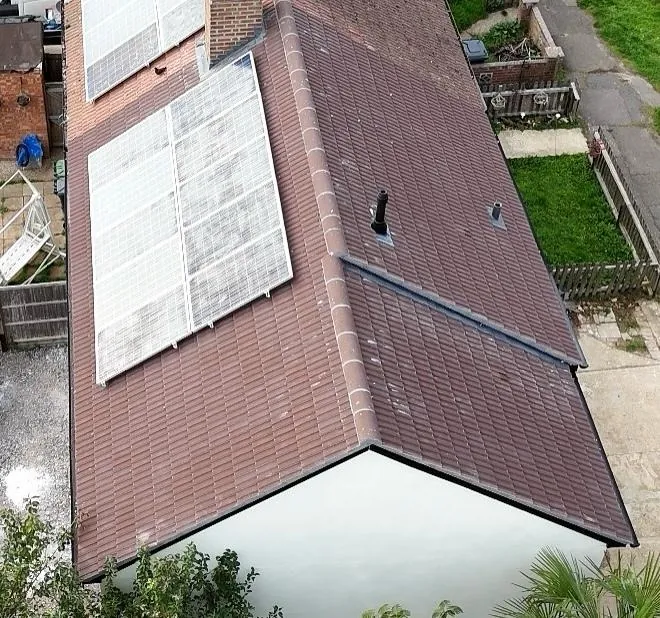
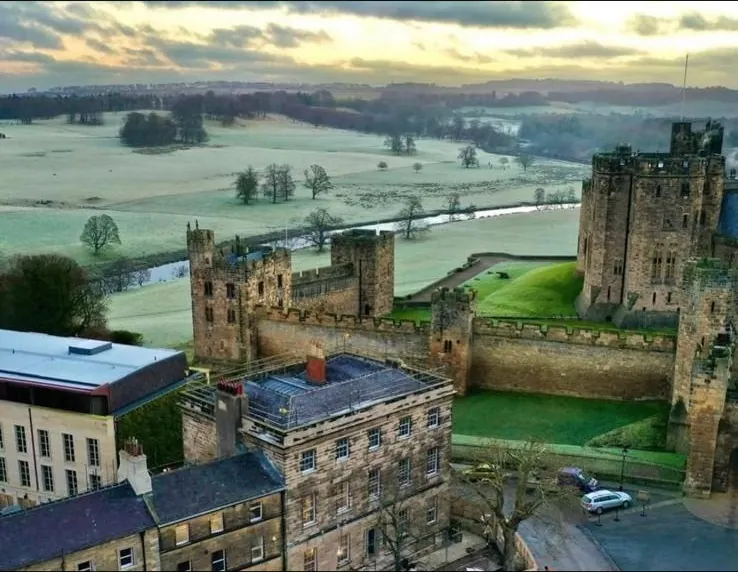
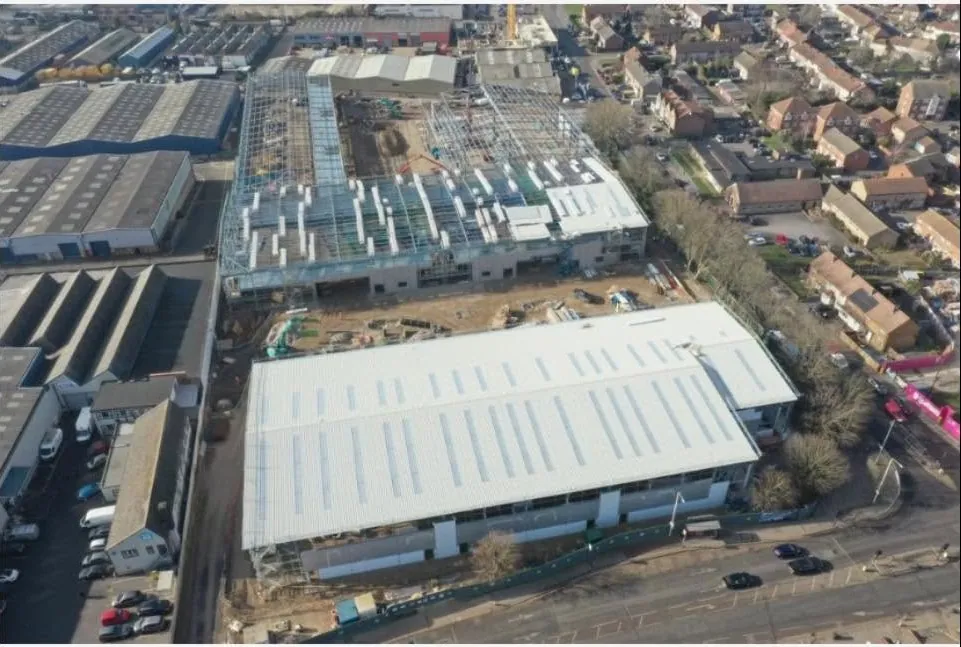
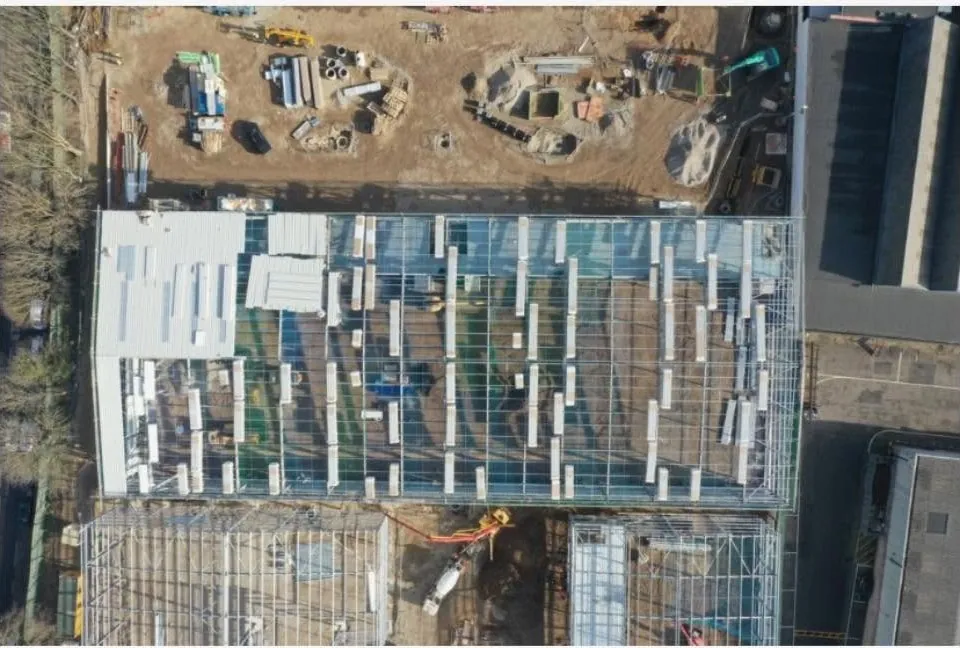
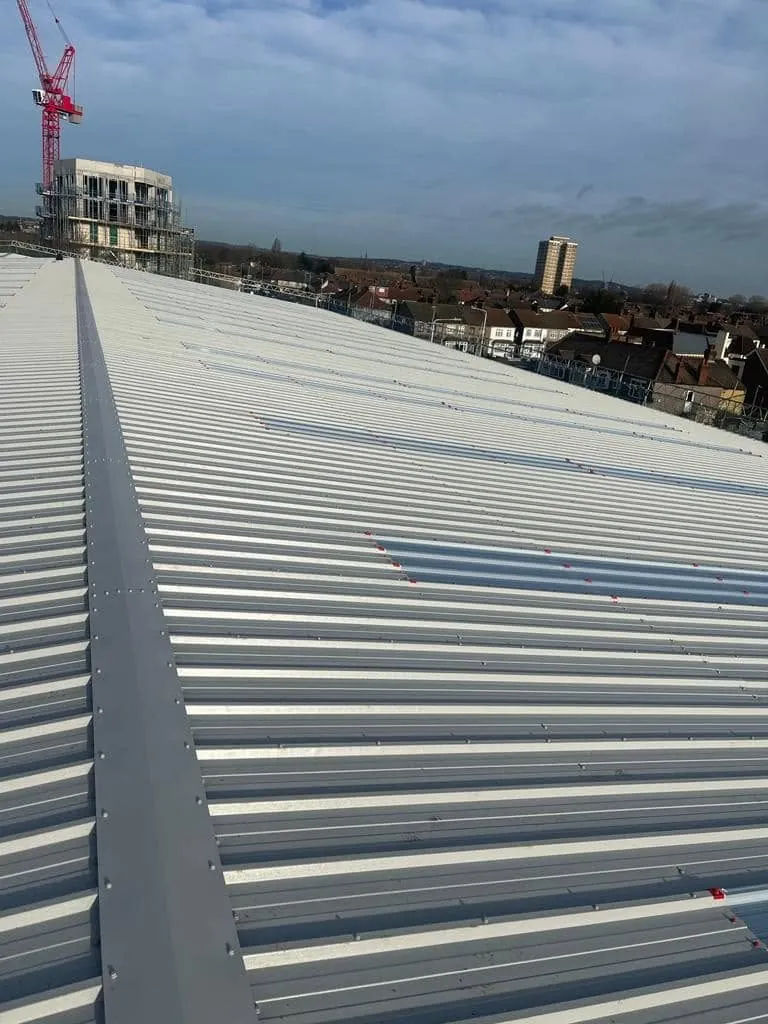
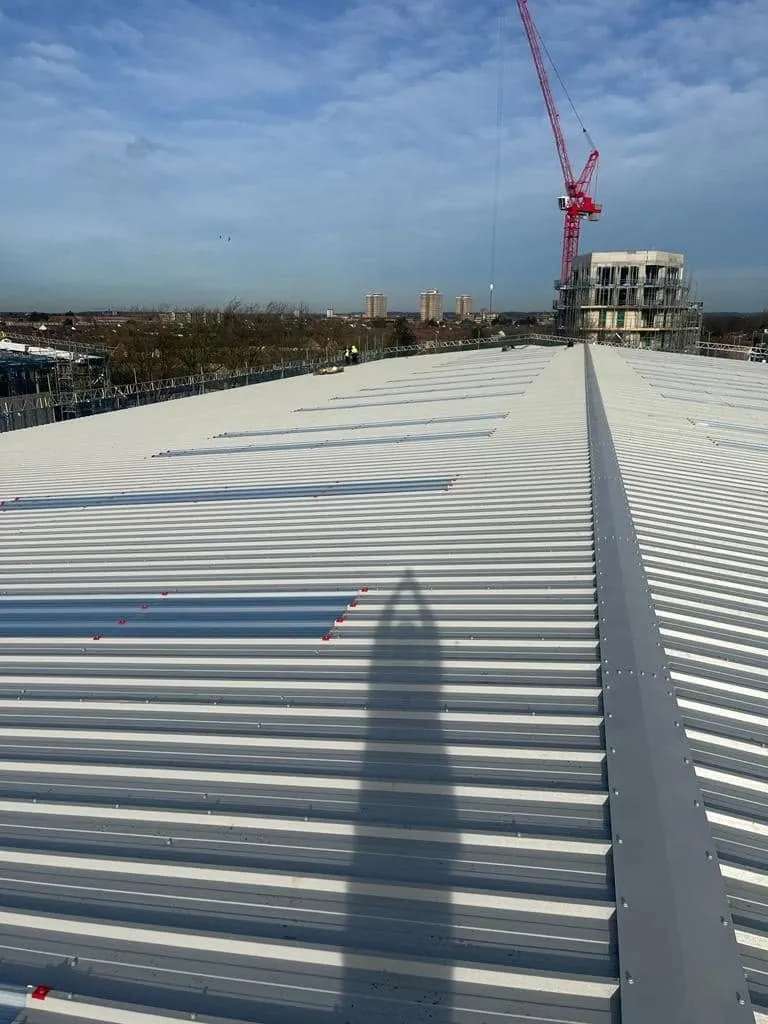
Drone surveys we have completed
What it is
A drone survey captures the entire roof in high-resolution imagery from angles no ladder reaches — including the ridge, the far slope, valleys, chimney tops and behind parapets.
Traditionally, finding out what is wrong with a roof meant either climbing it or paying for scaffold. On a steep, high, fragile or awkward roof that is expensive and slow, and it is a lot of money to spend just to establish whether work is needed at all. A drone answers that question first.
We fly the whole roof systematically, capturing each slope, the ridge and hips, every valley, the chimney stacks including the tops and the flaunching, all abutments and flashings, the gutter line and the verges. Nothing is judged from the pavement with binoculars, and nothing is skipped because it was awkward to reach.
The images then get interpreted by roofers rather than pilots. Reading a roof is a trade skill: knowing that a pattern of tiles creeping in a run means nail fatigue, that a dark line beside a valley means water is tracking, that hollow flaunching around a pot is about to become a falling-masonry problem. That interpretation is what makes the survey useful rather than just pretty.
You get the photographs, an explanation of what each shows in priority order, and a fixed written price for anything that needs doing. Drone surveys start from £250, and if the survey leads to work, the images become part of the record for that job.
Owners of steep, high or fragile roofs, anyone facing a scaffold bill just to investigate, landlords and agents, buyers with a roof flagged on a survey, and anyone making an insurance claim.
After storm damage, before committing to a large roofing quote, when a leak cannot be located, on a property with no safe ladder access, or when a surveyor has raised a concern.
Anyone can take an aerial photograph. Knowing which shadow is a split lead flashing and which is just a shadow requires having repaired several hundred of them.
A full systematic flight over every roof plane, high-resolution imagery of the covering and every detail, a photographic report with explanation, and a fixed written price for any remedial work.
What ignoring it costs
Without a proper look at the whole roof, decisions get made on partial information — and the cost of that shows up either as unnecessary work or as a leak that never gets found.
Erecting access purely to investigate is a significant cost before a single repair is priced, and on some roofs it has to come down and go up again once the scope is known.
Rear slopes, ridge tops, chimney flaunching and parapet gutters are invisible from the ground. Leaks originating there get misdiagnosed repeatedly and repaired in the wrong place.
Storm damage claims turn on proof. A photograph taken from the garden of a roof three storeys up is not proof; a set of high-resolution aerial images of the actual damage is.
Our process
We confirm the property, the access, the surroundings and the conditions, and agree a time. Surveys start from £250.
Every roof plane, ridge, hip, valley, chimney, abutment, verge and gutter line captured in high resolution from multiple angles.
The imagery is reviewed by roofers who identify what has failed, what is deteriorating and what is sound — with the reasoning explained.
You receive the photographs and a plain-English explanation in priority order, so you can see the whole roof for yourself.
Anything we recommend is quoted as a fixed written price, including any access it needs. No obligation to proceed.
What you get
You find out what the roof needs before spending anything on scaffold, and access is then priced for the actual job rather than for a look.
Every slope, including the ones you have never seen, plus chimney tops, valleys and behind parapets — areas a ladder inspection routinely misses.
Nobody walks on fragile slate or old clay to inspect it, so the survey cannot create the very defects it is looking for.
A survey can usually be flown and reviewed far quicker than access can be arranged, which matters when a roof is actively leaking.
High-resolution, dated imagery of storm damage is exactly the kind of proof insurers, surveyors and solicitors take seriously.
Height work is the biggest risk in roofing. Removing an unnecessary climb removes the risk entirely for an investigation that did not need one.
In detail
A drone is not a replacement for every inspection. It is the right answer for specific situations, and here is where it earns its cost.
“From start to finish, the service provided was excellent. It is clear that they take great pride in their work and genuinely care about making sure their customers are happy with the finished result. There was no pressure, and I felt confident that I was receiving genuine advice and a fair price. They were also respectful of the property and left everything clean and tidy once the work was finished.”
Steeply pitched Victorian roofs, three-storey properties, and coverings like old natural slate or fragile clay pantiles are all difficult and risky to inspect on foot. A drone gets a closer, more complete look at those roofs than a person standing on them safely could.
The top of a stack is invisible from anywhere on the ground and difficult even from a ladder. Cracked flaunching, loose pots, spalled brickwork and open flues all show clearly from above, which is why a drone often answers a chimney-breast damp question in one visit.
Concealed drainage channels behind parapets and between roof planes collect debris and split without anyone noticing. They are among the most damaging places for a roof to leak and among the hardest to see, which makes them ideal drone subjects.
After a south-westerly comes through, a survey establishes the full extent of the damage quickly — lifted tiles, displaced ridges, torn membrane at the eaves and damaged flashings — so a claim and a repair scope can be built on evidence rather than an estimate.
Where a homebuyer's survey flags the roof, an aerial survey turns 'the roof appears to be nearing the end of its life' into a specific list of defects with a fixed price attached. That is a far better position for a negotiation than an open question.
On commercial, industrial and multi-unit buildings, walking the roof to inspect it is slow and disruptive. A drone covers a large area quickly, records outlets, plant penetrations and covering condition across the whole footprint, and supports planned maintenance budgeting.
A drone cannot see under a tile, inspect a loft, or fly usefully in high wind or heavy rain. Where the question needs an internal view or physical inspection, we say so and inspect conventionally. Being clear about that is part of giving you an honest survey rather than a gadget.
If the survey leads to repairs, a re-roof, chimney work or leadwork, the imagery becomes the baseline record for that job and sits alongside the completion photographs. You end up with a before-and-after set covering the whole roof, not just the area worked on.
Straight answers
Anything not covered here, call 07926 240983. You will speak to an owner, not a salesperson, at any hour of the day.
Drone surveys start from £250. The final figure depends on the size and complexity of the property, and it is confirmed as a fixed price before we book the flight.
The flight itself is typically well under an hour for a domestic property. Reviewing the imagery and preparing the report takes longer, and we send it to you afterwards so you can go through it properly.
Not necessarily, though it helps if we can discuss the symptoms with you and get a view of anything showing inside. We will agree the arrangements when you book.
Drones do not fly usefully in high wind or heavy rain, so we will rebook rather than deliver a poor survey. In an active leak we will attend and make the roof watertight first, and survey once conditions allow.
For assessing the covering, details, chimneys, valleys and storm damage across the whole roof, it is generally better, because it covers everything at close range. It cannot lift a tile or inspect a loft, so where that is needed we inspect conventionally as well and tell you so.
Yes. High-resolution, dated imagery of the damage is exactly the sort of evidence insurers ask for, and it is usually the part homeowners struggle to produce for a roof they cannot reach.
Both. You get the imagery plus a plain-English explanation of what each part shows, in priority order — what needs doing now, what is worth watching and what is sound.
No. The survey and report are yours, and you are free to use them however you like, including getting other quotes against them.
Yes. Drone surveys suit large commercial and industrial roofs particularly well, since they cover a big area quickly without disruption to the building's occupants.
Havant, Emsworth, Rowlands Castle, Portsmouth, Southbourne, Southampton, Chichester and the wider Hampshire and West Sussex area.
Related work
See every service on our roofing services page, read about the family behind the firm on our about page, or head back to the homepage.
Where we work
Free quote
Book a drone survey from £250 and get high-resolution imagery of every slope, valley and chimney, with an honest explanation of what needs doing and a fixed price for any work.
S&S Roofing & Building Limited
13 Braishfield Rd, Havant, Hampshire PO9 2HS, UK
Open 24 hours, 7 days a week
We use essential cookies to run this site, and optional ones only if you accept. Cookie Policy.