The damp stops at source
Sealing the stack, the flaunching and the flashings deals with the actual entry point, so the chimney breast dries out and stays dry instead of staining through new paint.
24/7 emergency call-outs — Havant, Portsmouth & Hampshire24/7 emergency call-outs

Chimney repairs in Havant, Portsmouth & Hampshire
Repointing, flaunching, flashing and rebuilds that stop water tracking down a chimney breast — diagnosed with photographs, priced as one fixed figure, and detailed in lead rather than sealant.
Family-run, owner-led · free inspection with photographic report · £1,000,000 public liability insurance · guarantee confirmed in writing.
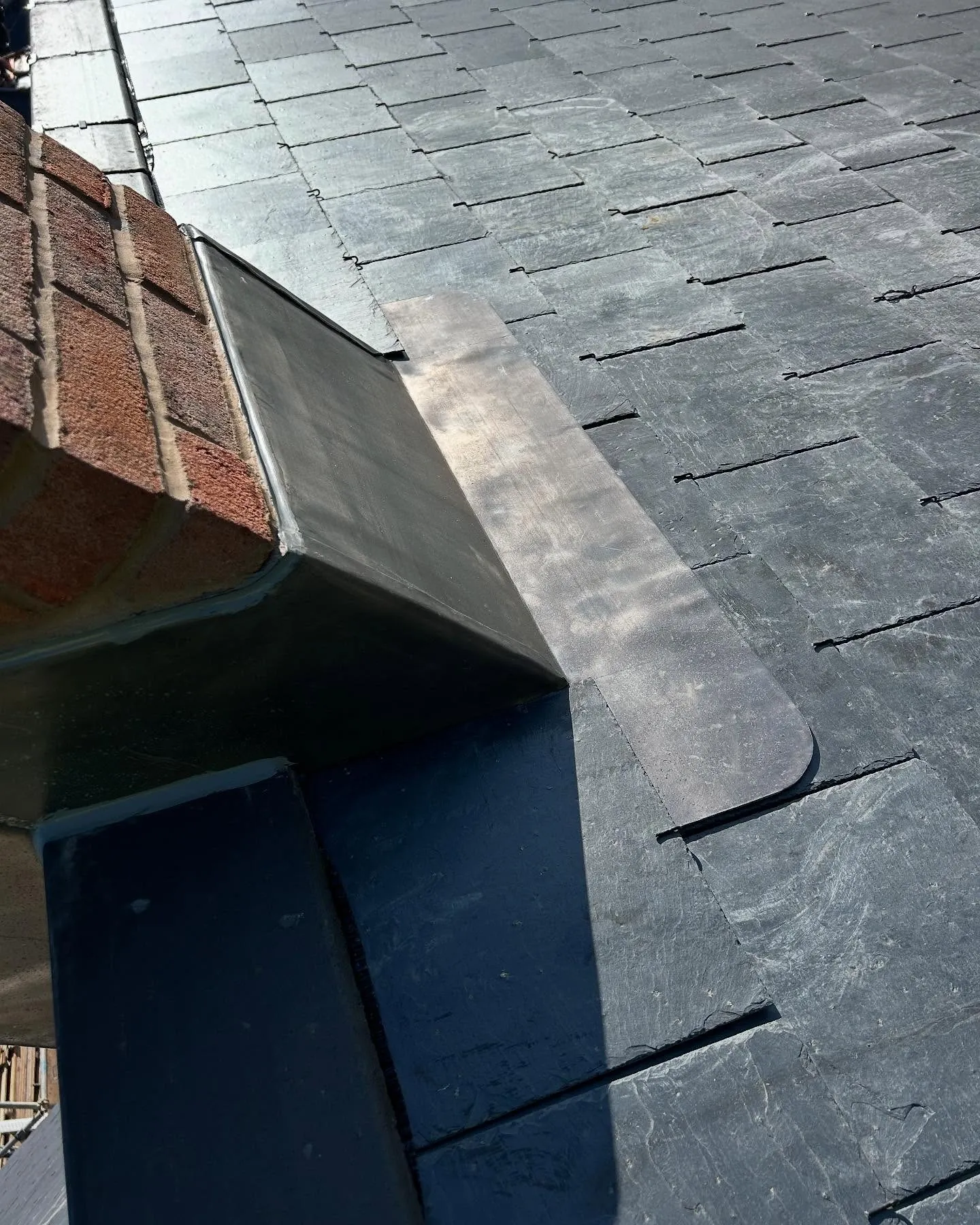
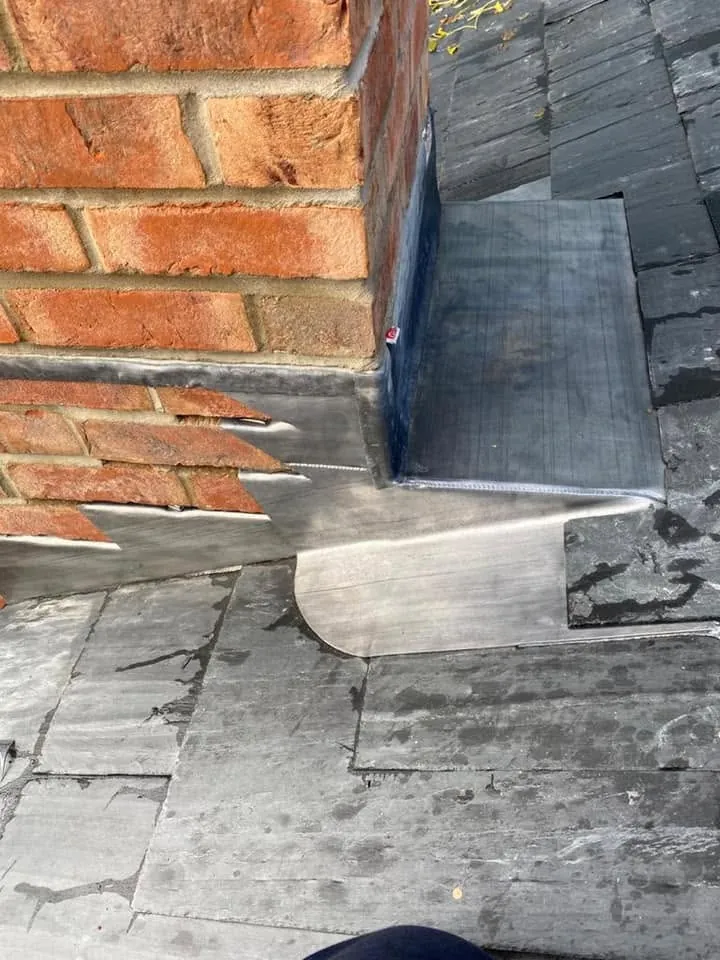
Chimney work we have completed
What it is
A stack stands above the roofline with no protection at all, and it is penetrated by the roof covering on every face. That combination makes it the most exposed and most leak-prone element on a pitched roof.
Chimney leaks show up in a very recognisable way: damp on the chimney breast in a bedroom, staining on the ceiling around the stack, or a tide mark in the loft on the timbers beside it. The cause is almost always one of four things — perished pointing, cracked flaunching around the pots, failed lead flashing where the stack meets the roof, or a redundant flue open to the sky.
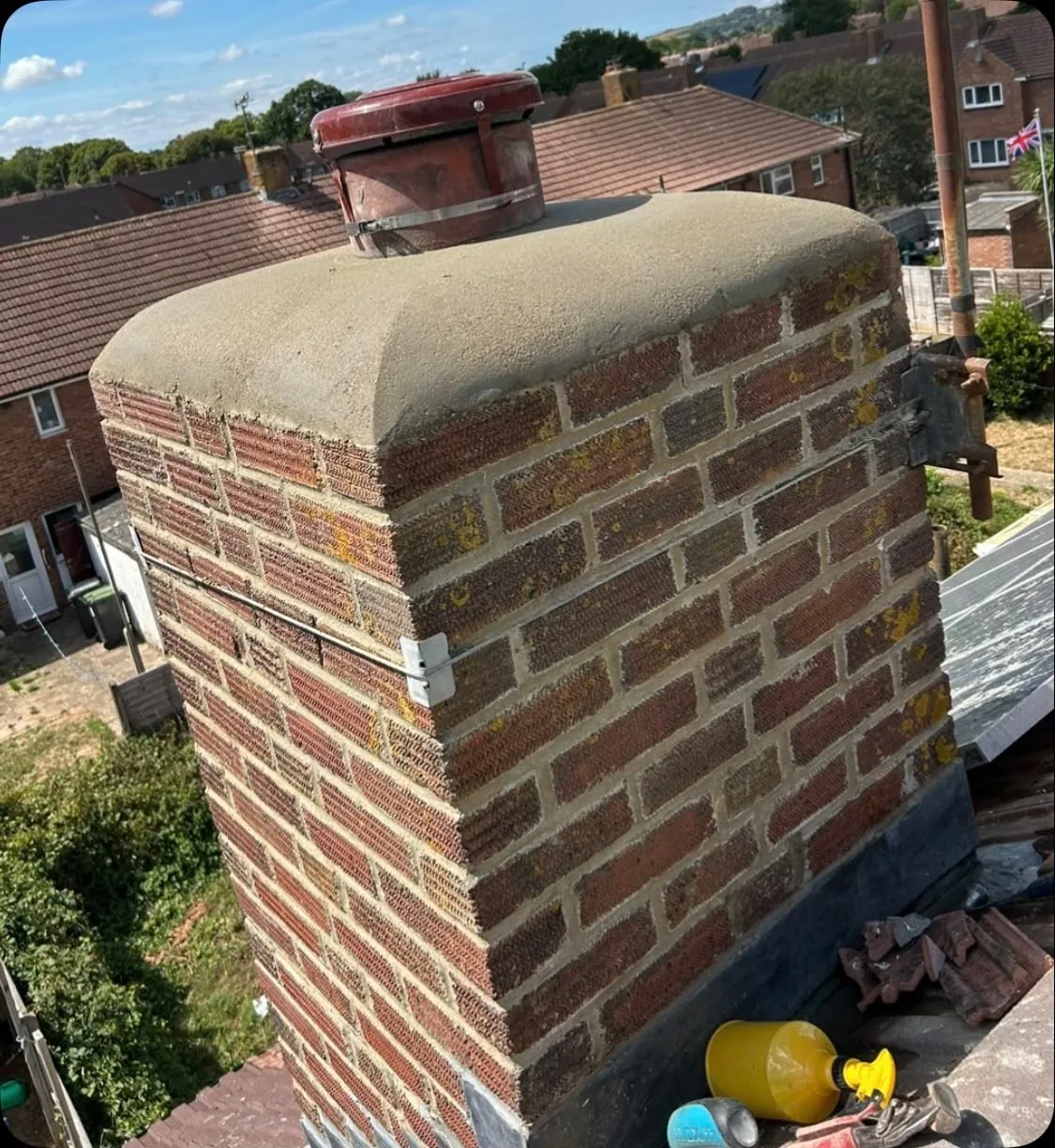
Pointing is the first to go. Mortar joints on an exposed stack take driving rain, frost and salt air, and once they recede the brickwork itself begins to absorb water. Raking out and repointing with a suitable mortar stops that, and it is a far smaller job than rebuilding a stack whose bricks have started to spall and delaminate.
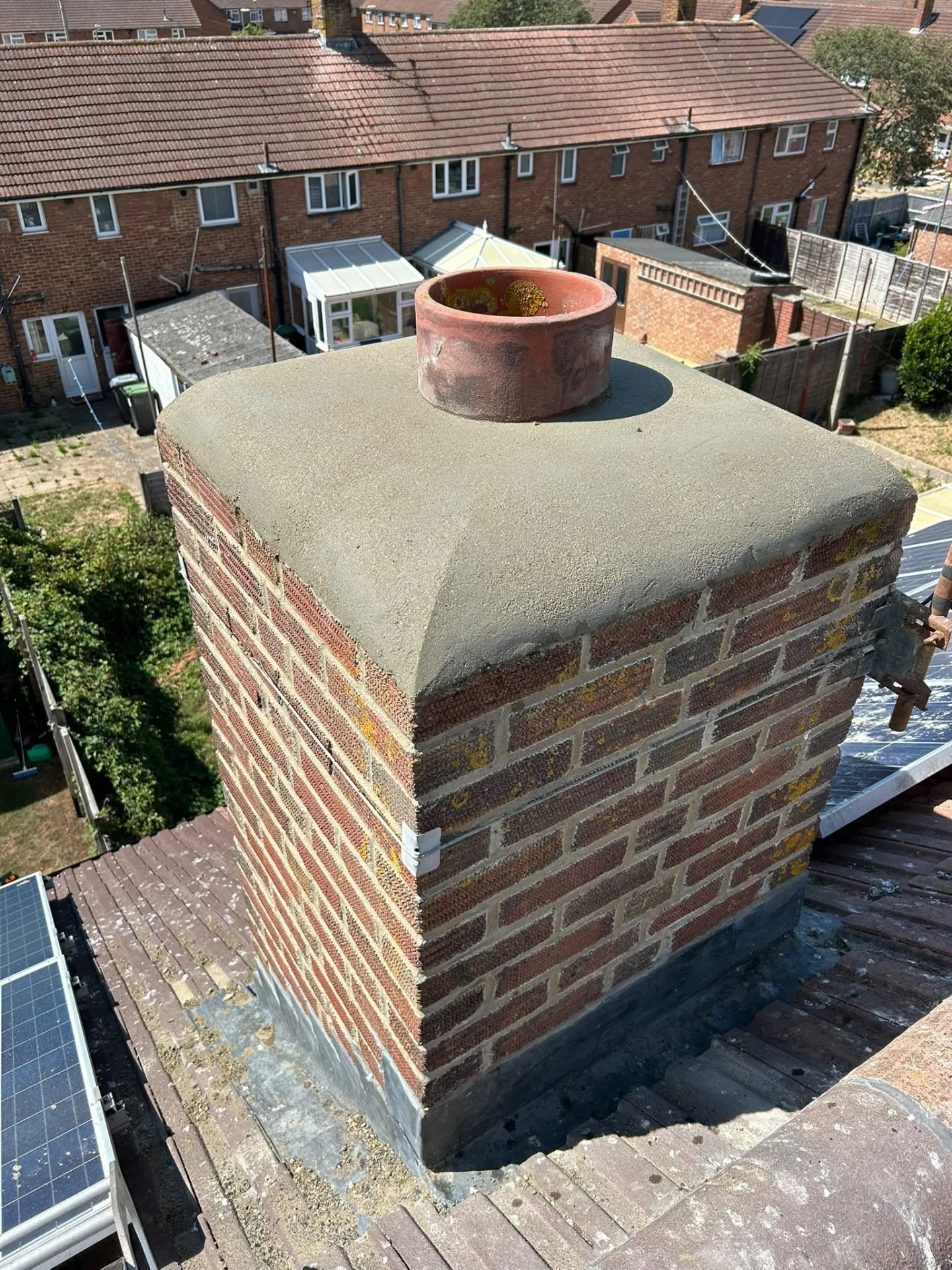
Flaunching — the mortar fillet that beds the pots into the top of the stack — cracks with heat and weather. Once it does, water runs straight down inside the stack. Re-flaunching, or fitting a cap or cowl on an unused flue, closes that path off.
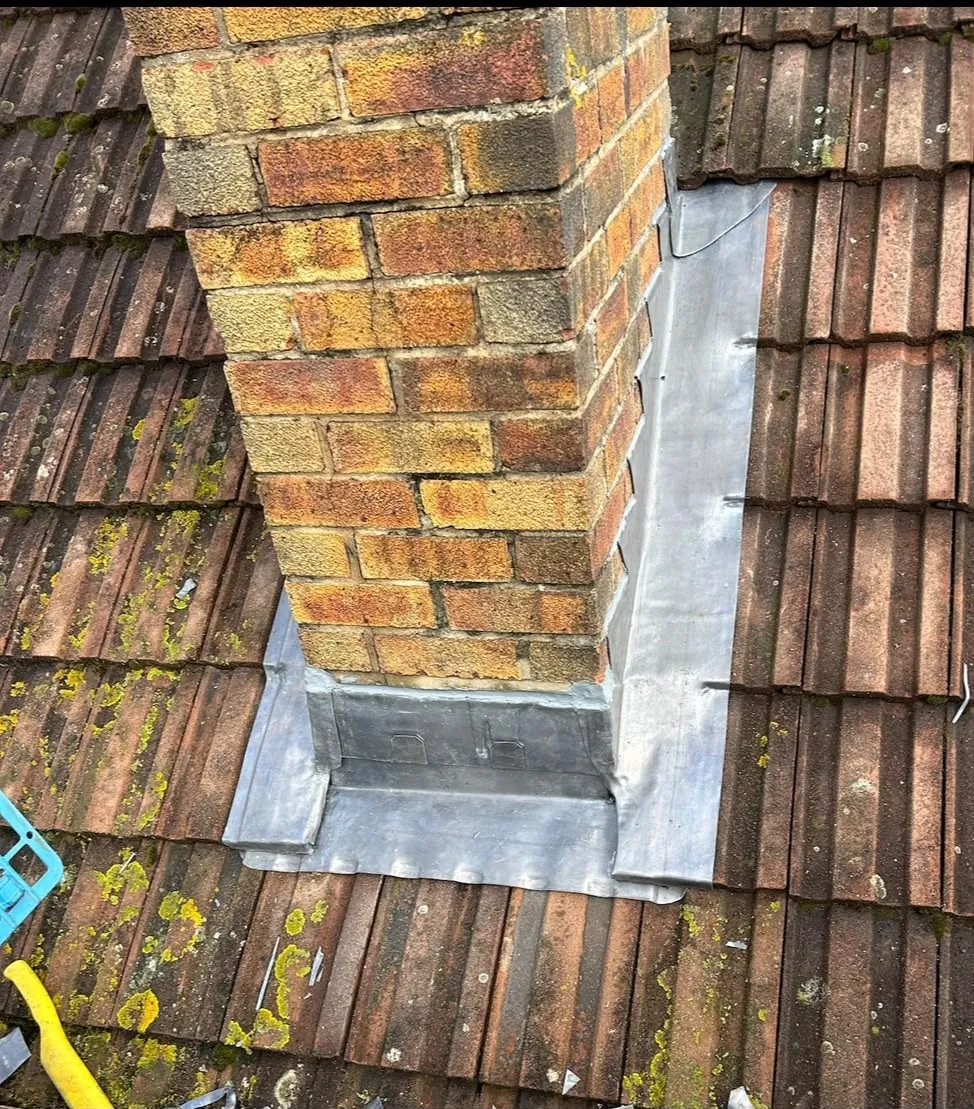
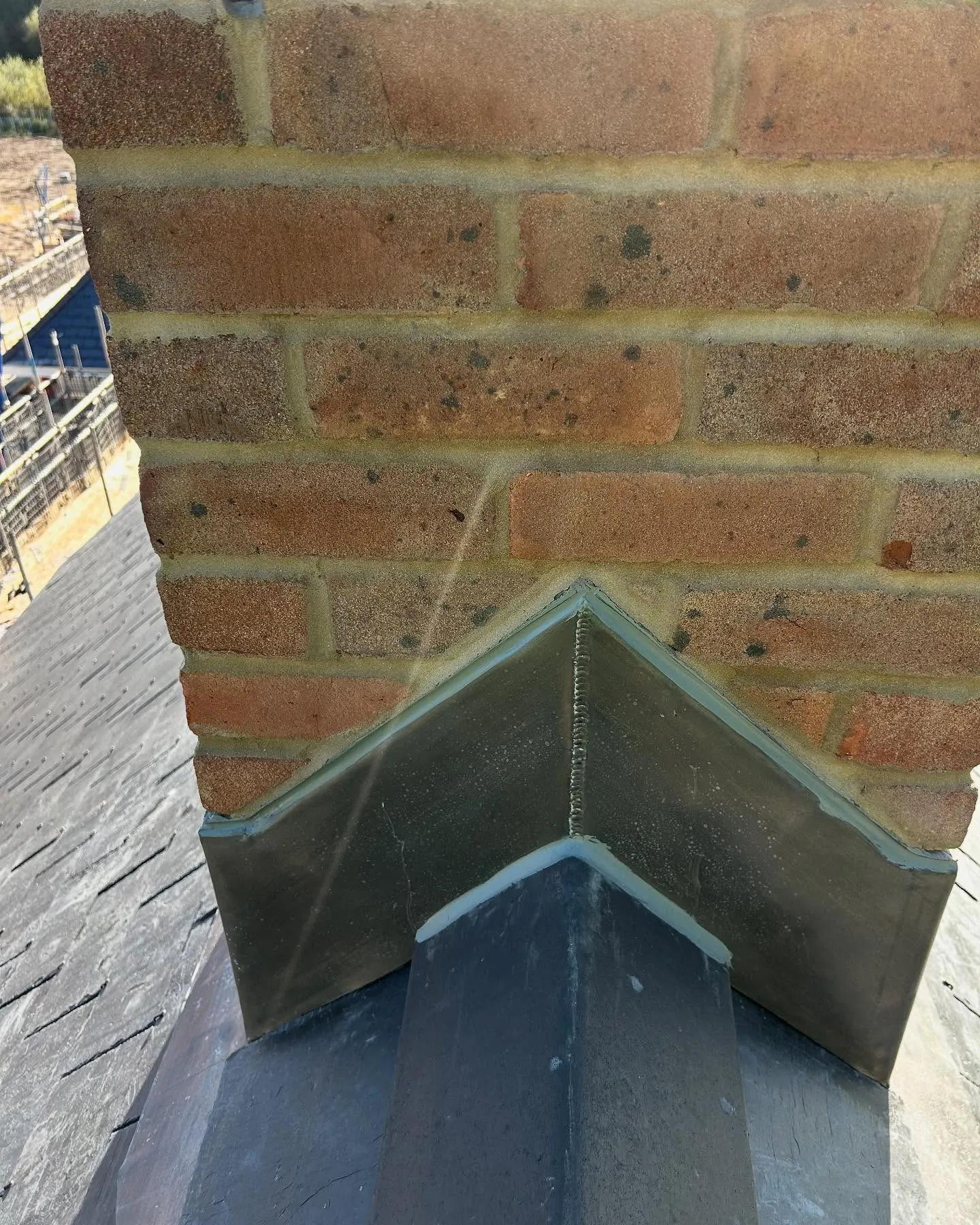
The flashings are the other half of the job. Where the stack passes through the roof there should be a back gutter, soakers, stepped flashings and an apron, all in correctly coded lead, chased into the joints. A great many chimney leaks are simply old mastic smeared over a flashing that gave up years ago. We take that off and detail it properly.
Homeowners with damp on a chimney breast, anyone with a disused stack they want capping or removing, and owners of period properties with weathered, recessed pointing.
When there is damp around the breast or ceiling near the stack, when mortar or brick fragments appear in the gutter, when pots look loose, or when flashing is lifting and visibly sealed with mastic.
Chimney work combines height, masonry and leadwork, and the wrong mortar mix on old brickwork can do more damage than the weather. Lead detailing in particular is a skill, not a product.
Inspection, photographic report, fixed written price, and the work itself: repointing, re-flaunching, lead flashings, capping, cowls, rebuilds or removal, plus site clear-up.
What ignoring it costs
Chimney defects cause two separate problems: water inside the building, and masonry that is no longer safely attached to anything above head height.
Water tracking down inside a stack soaks plaster and timber around the chimney breast, and salts drawn out of old flues leave staining that keeps coming back through fresh paint until the source is sealed.
Spalled brickwork, loose pots and hollow flaunching sit directly above your roof and often above a garden or a neighbour's property. In a gale they come down, and they take tiles with them.
Once water is inside the brickwork, frost breaks the faces off the bricks. Repointing while the bricks are sound is a modest job; a stack rebuild from roof level with scaffold is a substantially larger one.
Our process
Stack, pointing, flaunching, pots, flashings and the surrounding covering examined by scaffold, ladder or drone, plus the loft where accessible.
Photographs and a plain explanation of where water is entering, and whether repointing, flashing, capping or a rebuild is the right answer.
An itemised quote including access, so you know the full cost of the work before anyone touches the stack.
Joints raked and repointed, flaunching renewed, pots re-bedded or capped, and new lead flashings dressed and chased into the brickwork.
Details checked, roof covering made good around the stack, site cleared, completion photographs sent and your guarantee confirmed in writing.
What you get
Sealing the stack, the flaunching and the flashings deals with the actual entry point, so the chimney breast dries out and stays dry instead of staining through new paint.
Hand-dressed lead flashings, correctly coded and chased in, last for decades. Mastic lasts a couple of seasons and hides the problem while it worsens.
Re-bedded pots, sound flaunching and repointed brickwork remove the risk of masonry coming down onto tiles, a garden or a neighbour's property.
Repointing before the brick faces spall is a fraction of the cost of rebuilding a stack from roof level with scaffold in place.
If the stack is redundant, capping with a ventilated cowl keeps rain out while letting the flue breathe — or we can remove it and make the roof good properly.
On period and conservation-sensitive properties, we match mortar and brick to the original rather than leaving a hard grey band across an old stack.
In detail
Chimneys in Havant, Portsmouth and the surrounding villages range from Victorian brick stacks to 1960s render. Each needs a different approach.
“From start to finish, the service provided was excellent. It is clear that they take great pride in their work and genuinely care about making sure their customers are happy with the finished result. There was no pressure, and I felt confident that I was receiving genuine advice and a fair price. They were also respectful of the property and left everything clean and tidy once the work was finished.”
Joints are raked out to a proper depth — not skimmed over — and repointed with a mortar suited to the brick. Old, soft bricks need a softer, more permeable mix so the joint remains the sacrificial element; hard modern cement on soft brick forces moisture through the face of the brick and spalls it. Getting the mix right is the difference between a repair that protects the stack and one that destroys it.
The flaunching is the weathered mortar fillet that beds the pots and sheds water off the top of the stack. It cracks with heat cycling and frost. We remove the failed material, re-bed loose or damaged pots, and form new flaunching with a clean fall so water runs off rather than sitting on the top course.
A properly flashed stack has an apron to the front, stepped flashings and soakers to the sides, and a back gutter to the rear where water coming down the roof is diverted around the stack. Each element is cut and dressed in appropriately coded lead, wedged into raked joints and pointed. This is where most chimney leaks live.
A disused flue still needs to breathe, or moisture condenses inside it and appears as damp in the room below. Ventilated caps and cowls keep rain and birds out while allowing airflow. On working flues, anti-downdraught and bird-guard cowls solve different problems and we will advise which fits your situation.
Where the brickwork has spalled badly or the stack is leaning, rebuilding from roof level up is the honest answer. Bricks are matched as closely as possible, the stack is rebuilt to line, and it is then re-flashed and re-flaunched as part of the same job so nothing is left half-done.
If a stack is redundant and you would rather be rid of it, it can be taken down to below roof level and the roof covering, membrane and battens made good so the area is indistinguishable from the rest of the roof. The critical part is the making good — a removal that leaves a patched hole simply relocates the leak.
Rendered stacks fail differently: the render cracks, water gets behind it and then it blows off in sheets. Repair means removing the loose material back to a sound edge and re-rendering, rather than filling a crack that will reopen along the same line by the following winter.
Most chimney work needs scaffold, both for safety and to do the job properly. We arrange it with a scaffolding company we work with regularly and include it in the fixed price, so you deal with one firm. Where the question is only whether work is needed, a drone survey can answer that first without any access cost.
Straight answers
Anything not covered here, call 07926 240983. You will speak to an owner, not a salesperson, at any hour of the day.
It depends on the size of the stack, its condition and the access required, so we price every chimney individually after a free inspection and give you a fixed written figure that includes scaffold where it is needed.
Repointing, re-flaunching and re-flashing a domestic stack is usually a job of a few days including access, weather permitting. A rebuild takes longer. We give you the expected duration with the quote.
Most commonly perished pointing, cracked flaunching, failed lead flashing or an uncapped disused flue. The free inspection identifies which, with photographs, so you are not re-plastering a wall that is going to get wet again.
Almost always, for safety and to work properly at the stack. It is included in your quote rather than billed separately, so the figure you see is the figure you pay.
If the stack is sound and adds character, repointing and capping with a ventilated cowl is usually the best value. If it is badly deteriorated and you have no use for it, removal and making the roof good properly can be the more economical long-term choice. We will price both.
Properly executed repointing and correctly dressed lead flashings are long-term work measured in decades rather than years. Flaunching sits at the most exposed point on the building and benefits from being checked during annual roof maintenance.
Yes. There is a workmanship guarantee, with cover that varies by job type, and the exact terms for your chimney work are confirmed in writing with the quote.
We match bricks as closely as available stock allows and select a mortar suited to the age and softness of the existing brickwork, which matters just as much as the colour on a period stack.
Yes. Loose pots or displaced masonry above a roof are treated as a make-safe priority, and the phone is answered 24 hours a day, seven days a week. An emergency call-out fee applies, starting at £50, and may vary with travel distance.
Yes — Havant, Emsworth, Rowlands Castle, Portsmouth, Southbourne, Southampton, Chichester and the wider Hampshire and West Sussex area.
Related work
See every service on our roofing services page, read about the family behind the firm on our about page, or head back to the homepage.
Where we work
Free quote
Book a free inspection and we will photograph the stack, the flaunching and the flashings, tell you exactly where water is getting in, and give you a fixed written price to seal it.
S&S Roofing & Building Limited
13 Braishfield Rd, Havant, Hampshire PO9 2HS, UK
Open 24 hours, 7 days a week
We use essential cookies to run this site, and optional ones only if you accept. Cookie Policy.