Dry walls
Rainwater is captured and taken to the drain instead of running down one patch of masonry every time it rains, which is the root of a great many 'mystery' damp problems.
24/7 emergency call-outs — Havant, Portsmouth & Hampshire24/7 emergency call-outs

Fascias, soffits & guttering in Havant & Portsmouth
Replacement fascias, soffits and guttering fitted to proper falls and secure fixings — so the water off a full roof leaves the building instead of soaking a wall, a fascia or a ceiling.
Family-run, owner-led roofing · free inspection with photographic report · £1,000,000 public liability insurance · fixed written price before work starts.
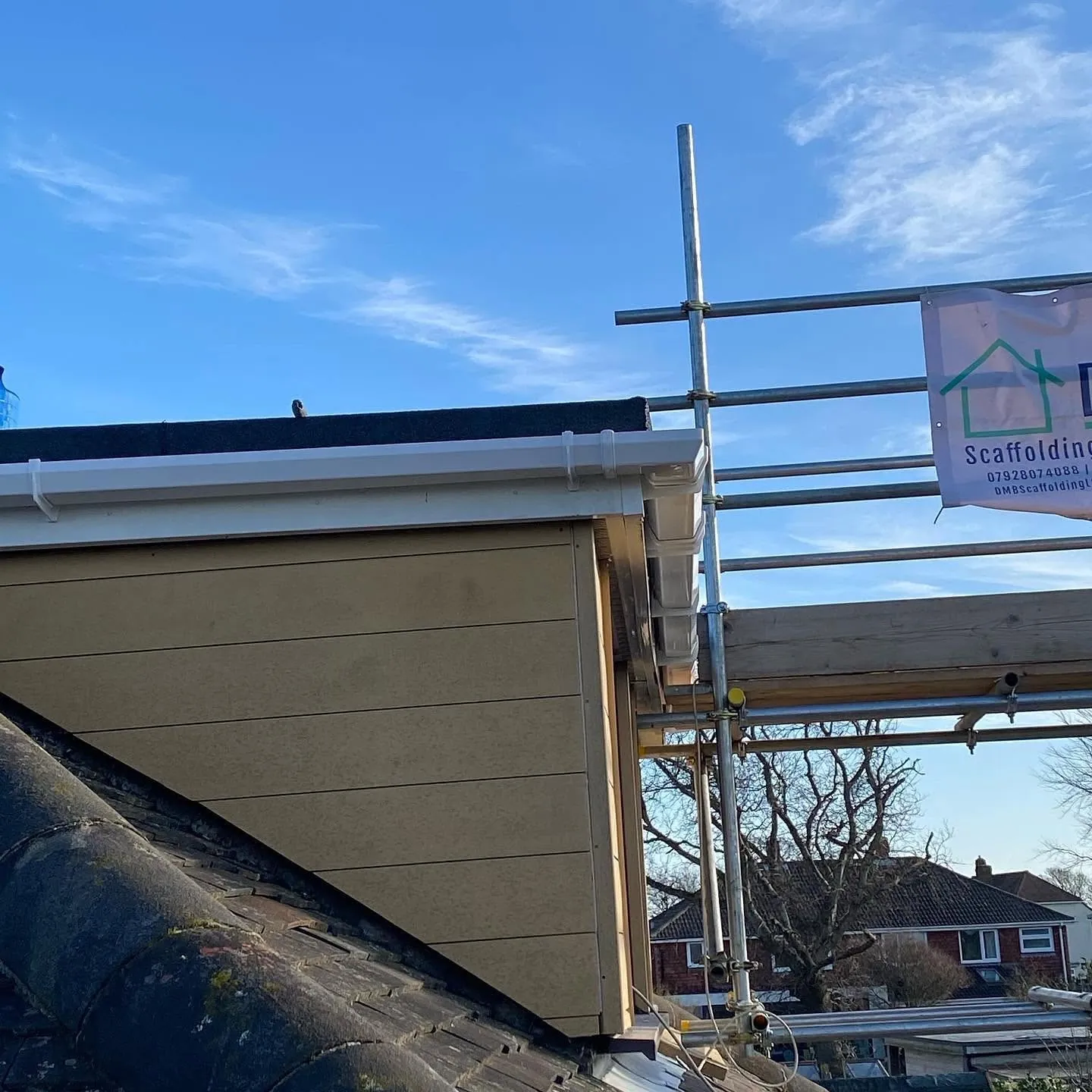
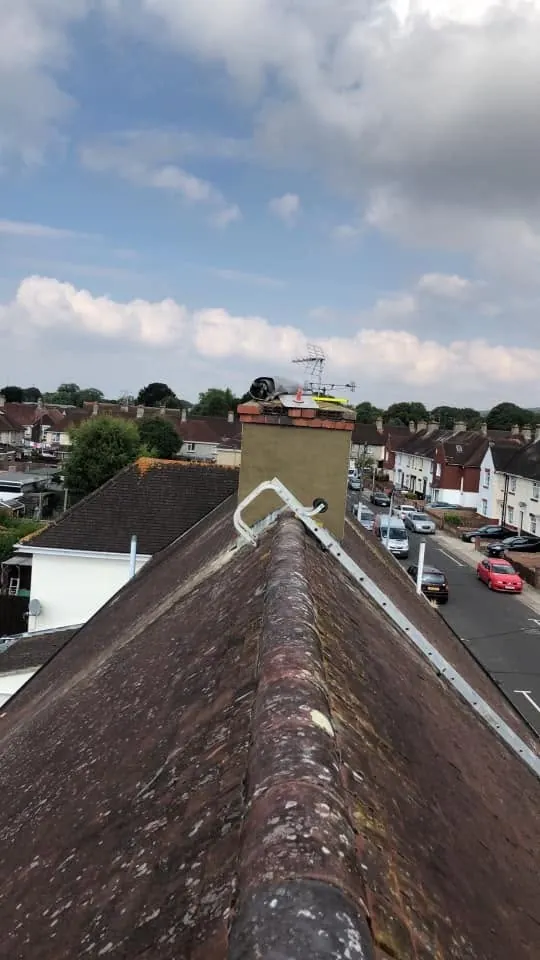
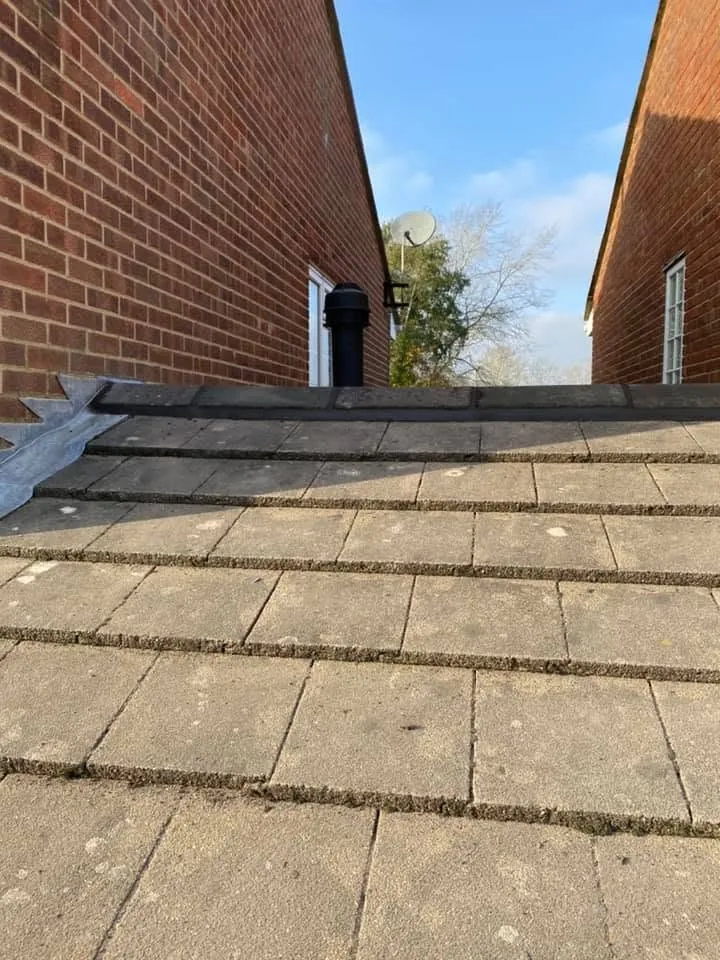
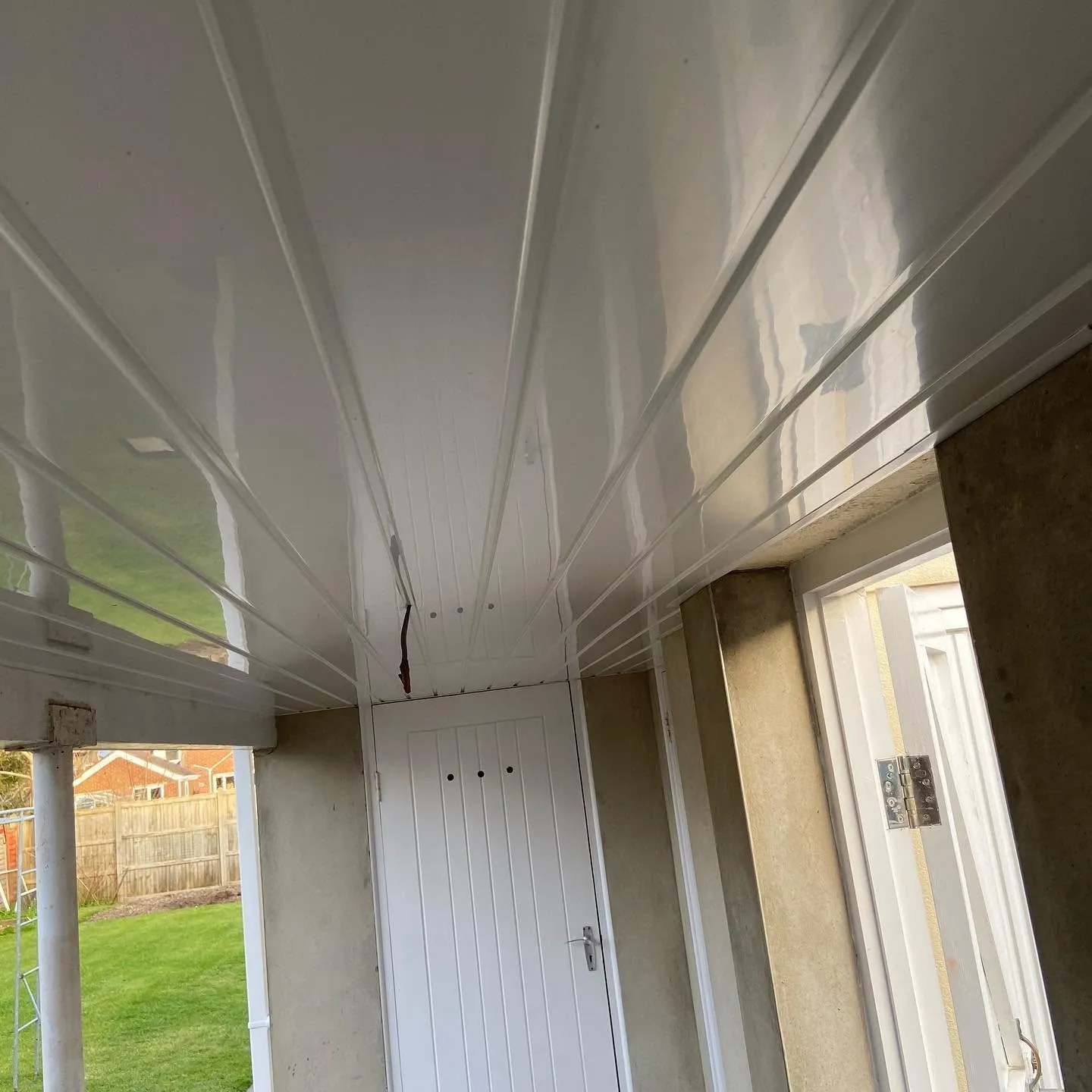
Fascias & guttering we have completed
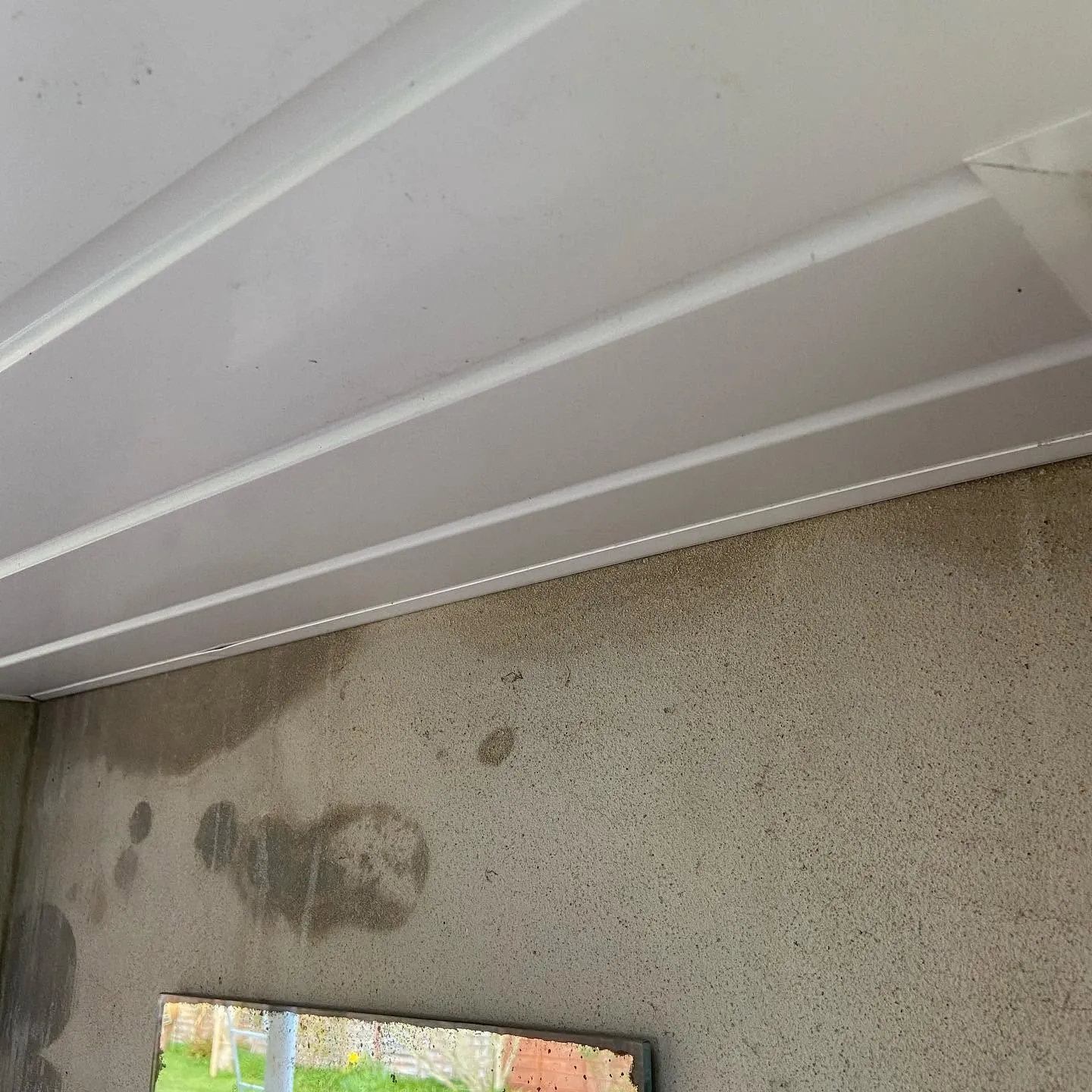
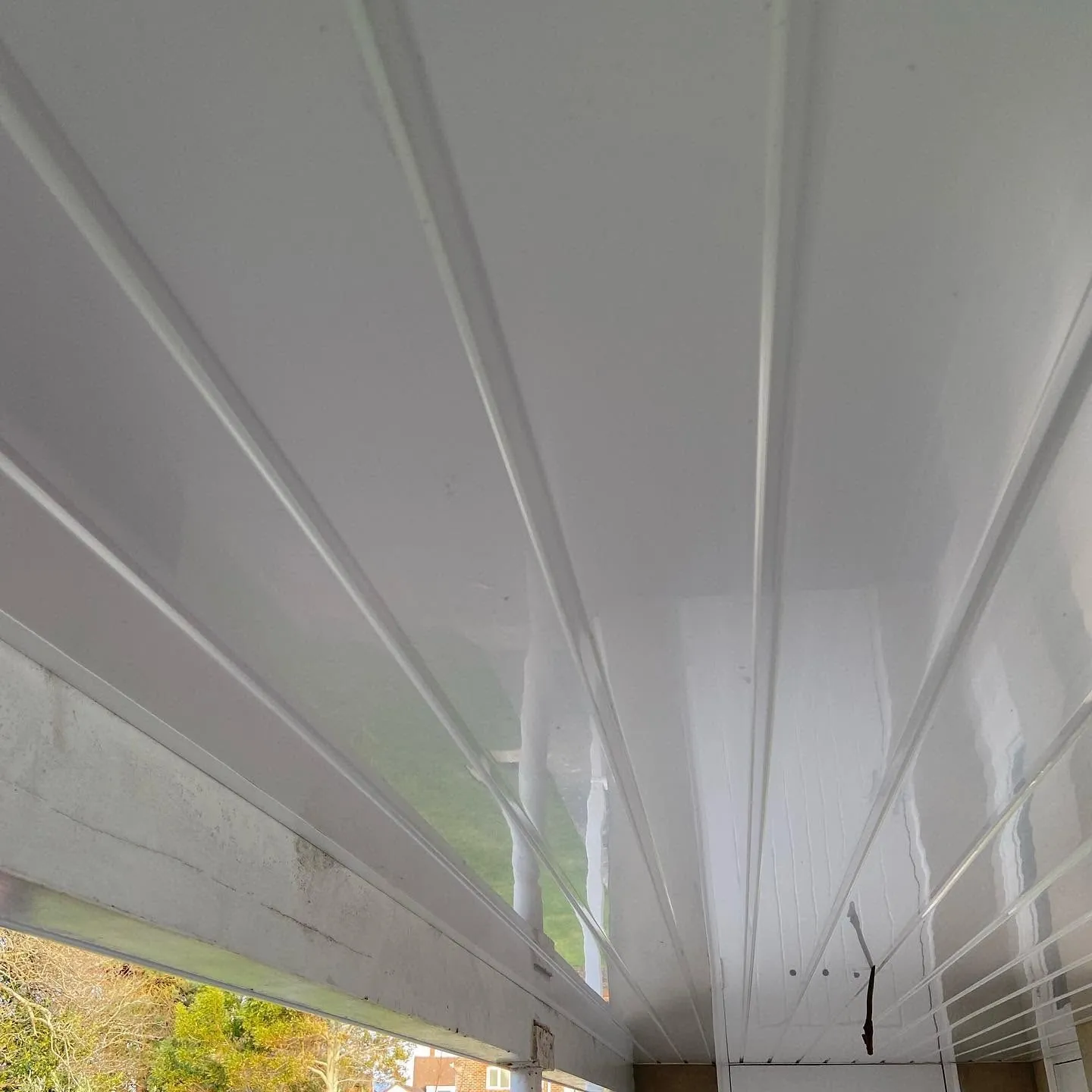
What it is
Fascias, soffits, bargeboards and guttering collect everything the roof sheds and move it away from the building. When any part of that chain fails, the water goes somewhere it should not.
The fascia carries the guttering and closes off the rafter ends. The soffit seals the underside of the overhang while allowing ventilation into the loft. The gutter catches the run-off and takes it to a downpipe and away. Every one of those jobs matters, and on a lot of Havant and Portsmouth housing the original timber roofline has been painted over rather than replaced for decades.
Timber fascias fail from behind. Water gets in at the joints and behind the gutter, the timber softens, the gutter fixings lose their grip, and the gutter starts to sag — which changes the fall and makes the overflow worse. By the time paint is flaking and the board feels spongy, the rafter ends behind it are often wet too.
Guttering fails more visibly: joints leak, brackets pull out, sections sag between fixings, and a downpipe blocks so a corner overflows every time it rains hard. That overflow soaks one patch of brickwork repeatedly, and persistently wet brickwork is how damp appears on an internal wall with no leak in the roof at all.
We replace fascias, soffits, bargeboards and guttering in low-maintenance uPVC in a range of colours and profiles, or repair and re-hang where the existing timber is genuinely sound. Everything is set to fall towards the outlet, fixed into solid timber, and checked with water before we finish.
Homeowners with peeling, sagging or rotten roofline timber; anyone with a gutter that overflows in the same spot every time; landlords wanting to stop repainting boards every few years.
When gutters sag, leak at the joints or overflow; when fascia paint blisters and the board feels soft; when there is a green algae stripe down the wall; or when birds are getting into the eaves.
It is ladder and height work over paths and driveways, and gutters must be hung to a consistent fall into a sound fascia. A gutter screwed into rotten timber will drop again within a year.
Strip and disposal of old boards and gutters, inspection of rafter ends, new fascia, soffit, bargeboard and guttering, eaves ventilation, downpipe connections and a water test.
What ignoring it costs
Guttering is the cheapest part of the roof to put right and one of the most expensive to ignore, because the damage it causes lands on brickwork, plaster and timber rather than on the roof.
Water pouring down one section of wall keeps the masonry permanently wet. That shows up inside as damp patches, blown plaster and mould on an internal wall, and it gets blamed on everything except the gutter.
Water sitting behind a failed fascia gets straight into the ends of the rafters. Replacing rafter ends means opening up the eaves and part of the covering — several times the cost of the fascia that would have prevented it.
Gaps in a decayed soffit let birds, squirrels and wasps into the loft. Blocked or sealed-up eaves ventilation causes loft condensation, which soaks insulation just as effectively as a leak does.
Our process
We check the fascia, soffit, bargeboards, gutter falls, joints, brackets and downpipes, and photograph the rafter ends where they are visible.
You get photographs and a straight answer on what needs replacing, what can be cleared or re-hung, and where the overflow is actually coming from.
An itemised quote covering removal, disposal, new roofline components, colour and profile choice, and any downpipe or gully work.
Old boards and gutters removed, rafter ends checked, new fascias, soffits and guttering fitted to a consistent fall with secure fixings and eaves ventilation.
We run water through the system to confirm it drains to the downpipe with no leaks, clear the site and confirm your guarantee in writing.
What you get
Rainwater is captured and taken to the drain instead of running down one patch of masonry every time it rains, which is the root of a great many 'mystery' damp problems.
uPVC fascias and soffits do not need scraping, priming and painting every few years. Maintenance becomes an occasional wash rather than a ladder job.
Brackets fixed into new, solid fascia at the correct spacing and fall do not sag, so the system carries a heavy downpour instead of overflowing at the joints.
Sealing the eaves properly keeps water off the rafter ends and wall plate — the timbers that are most expensive to repair once they go.
Ventilated soffits let the loft air move, which keeps condensation down and keeps your insulation dry and doing its job.
New roofline in a colour that suits the house sharpens the whole frontage, and it is one of the most visible improvements per pound spent.
In detail
Roofline is straightforward work done badly by a lot of people. The specifics below are what separate a system that lasts from one that sags.
“From start to finish, the service provided was excellent. It is clear that they take great pride in their work and genuinely care about making sure their customers are happy with the finished result. There was no pressure, and I felt confident that I was receiving genuine advice and a fair price. They were also respectful of the property and left everything clean and tidy once the work was finished.”
Full replacement uPVC boards are the standard specification: rot-proof, colour-stable and available in white, black, grey, rosewood and woodgrain finishes to suit the property. Boards are fixed into sound rafter ends with the correct fixings, with joints and corners trimmed properly rather than filled. Vented soffit boards or continuous vent strips maintain airflow into the loft.
Cladding over existing timber is cheaper and occasionally appropriate on genuinely sound boards. Where the timber is soft, it hides decay and traps moisture. We inspect the timber before recommending either, show you photographs, and will not cap over something that should be removed.
Half-round is the common domestic profile; square and ogee profiles carry more water and suit larger or steeper roofs; deepflow sections exist for roofs that shed a lot of water fast. Getting the capacity right matters on a big pitched roof in heavy rain — an undersized gutter overflows no matter how well it is hung.
Gutters need a consistent fall towards the outlet, brackets at correct centres so the run does not sag between them, and expansion allowance at the joints so the plastic can move with temperature without popping a seal. These three things account for most gutter failures we are called to.
A downpipe is only useful if what it discharges into is clear. We check the gully or soakaway, fit shoes or connect directly, and add hoppers where several roofs discharge into one pipe. A blocked gully makes a perfect gutter overflow at ground level instead of at the eaves.
Bargeboards close off the gable and take the same weather as the fascia. Behind the gutter, eaves protection trays carry water off the membrane and into the gutter rather than behind it — a small component that is frequently missing on older roofs and is worth adding during a replacement.
Some older and period properties in the area still have cast iron guttering, which is heavy, long-lived and repairable but needs the right fixings and handling. On heritage-sensitive frontages, cast-effect aluminium and uPVC profiles keep the appearance while removing the maintenance.
Domestic work is usually a full house or an elevation at a time and takes days rather than weeks. On commercial buildings, larger box and industrial gutters, longer runs and more outlets are involved, and access and phasing matter more. Both get the same fixed written price after a free inspection.
Straight answers
Anything not covered here, call 07926 240983. You will speak to an owner, not a salesperson, at any hour of the day.
It depends on the length of roofline, the number of storeys, access and the profile you choose, so we price each property individually after a free inspection and give you a fixed written figure covering materials and labour.
Most domestic roofline replacements are completed in a few days once access is in place, and often less for a single elevation. We confirm the expected duration with the quote.
Yes. If the fascia is sound and the problem is silt, moss, a blocked downpipe or a failed joint, we will clear and repair rather than replace, and tell you honestly how much life is left in the existing system.
For most Hampshire properties, once or twice a year — ideally after autumn leaf fall — and more often under trees or on a roof with moss. Gutter clearing is part of our roof maintenance service and is easy to combine with a moss removal visit.
Single-storey and many two-storey jobs are done from ladders or a tower; higher or more awkward elevations may need scaffold. Whatever access is required is priced in the quote so there is nothing extra to arrange or pay for.
White, black, anthracite grey, rosewood and woodgrain finishes are all commonly available, in half-round, square and ogee gutter profiles. We will show you the options and match what suits the property and the street.
Yes. We provide a workmanship guarantee, with cover that varies by job type, and the exact terms are confirmed in writing alongside your quote.
Quality uPVC fascias, soffits and guttering are a long-term, low-maintenance replacement for painted timber and are expected to last decades rather than years, needing only an occasional wash and a gutter clear-out.
Very often, yes. A gutter overflowing in the same place keeps that section of brickwork saturated, and the damp appears inside with no sign of a roof leak. It is one of the first things we check on any internal damp complaint.
Yes. The phone is answered 24 hours a day, seven days a week, and a fallen or hanging gutter over a path is treated as a make-safe priority. An emergency call-out fee applies, starting at £50, and may vary with travel distance.
Related work
See every service on our roofing services page, read about the family behind the firm on our about page, or head back to the homepage.
Where we work
Free quote
Book a free inspection and we will photograph the state of your fascias, soffits and guttering, tell you what needs replacing and what does not, and give you a fixed written price.
S&S Roofing & Building Limited
13 Braishfield Rd, Havant, Hampshire PO9 2HS, UK
Open 24 hours, 7 days a week
We use essential cookies to run this site, and optional ones only if you accept. Cookie Policy.